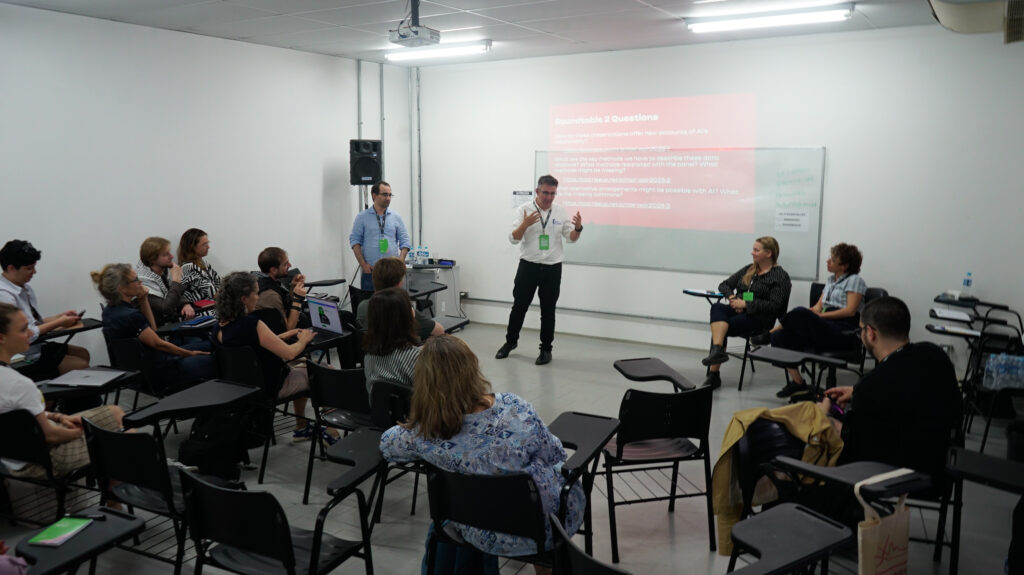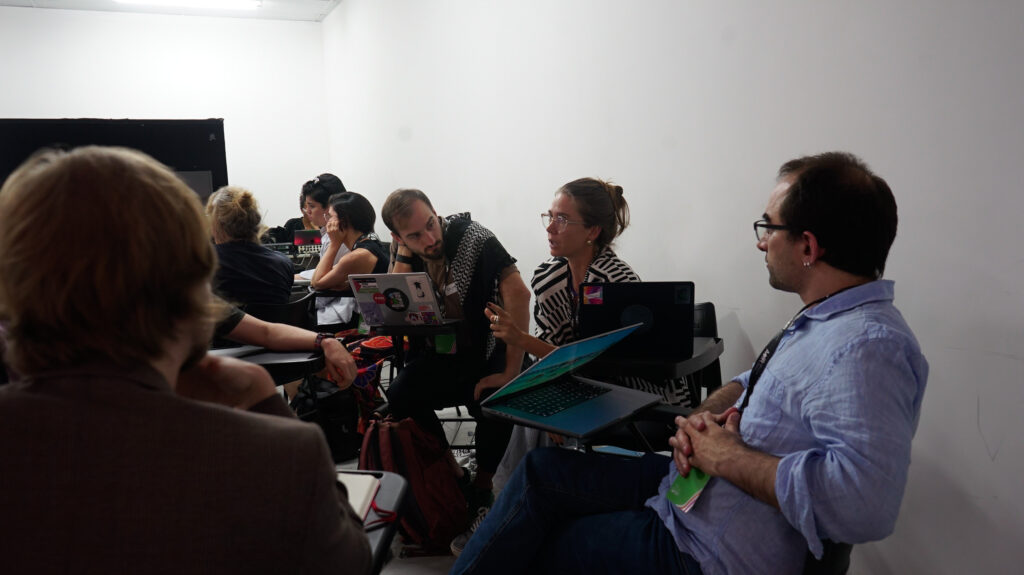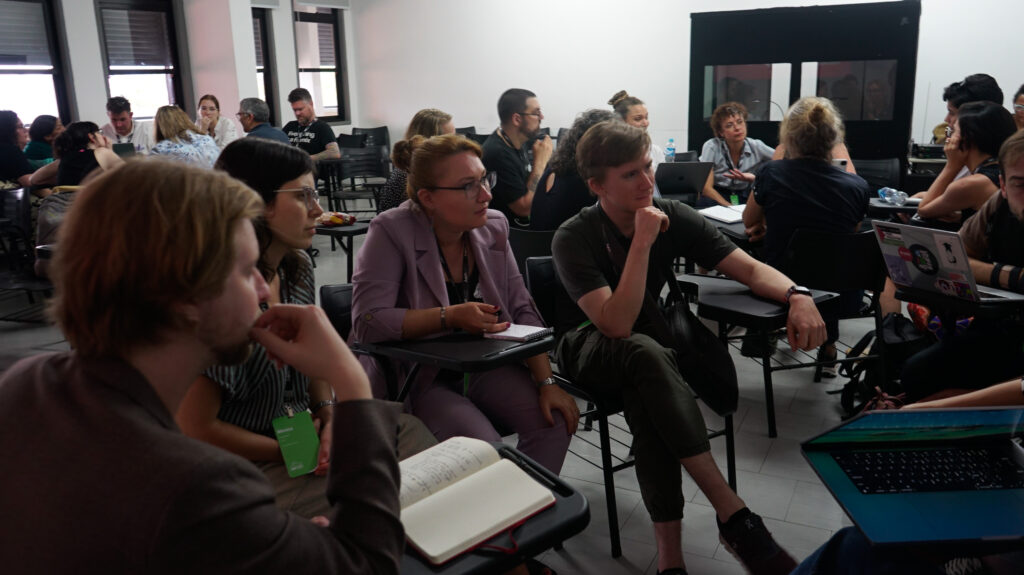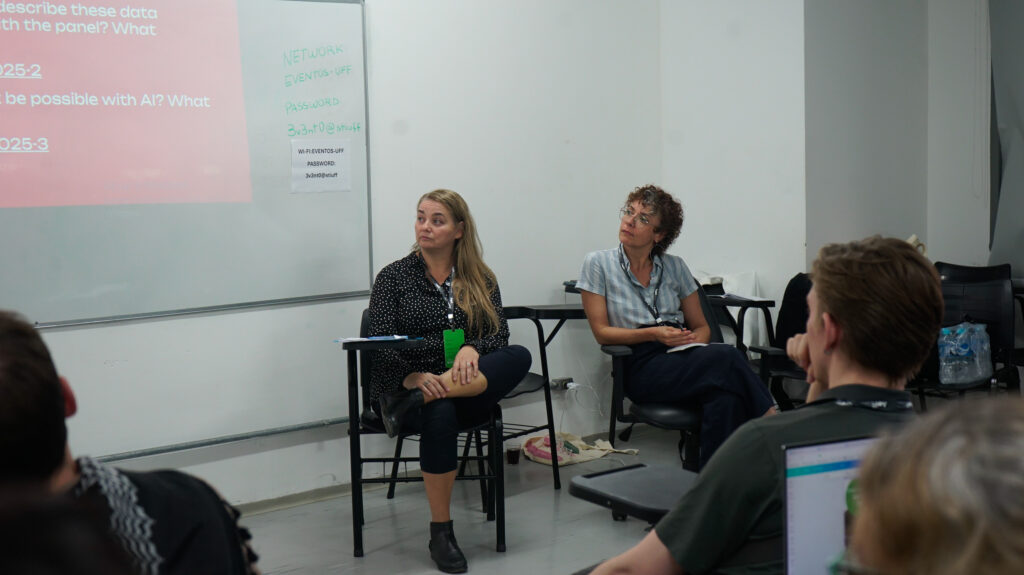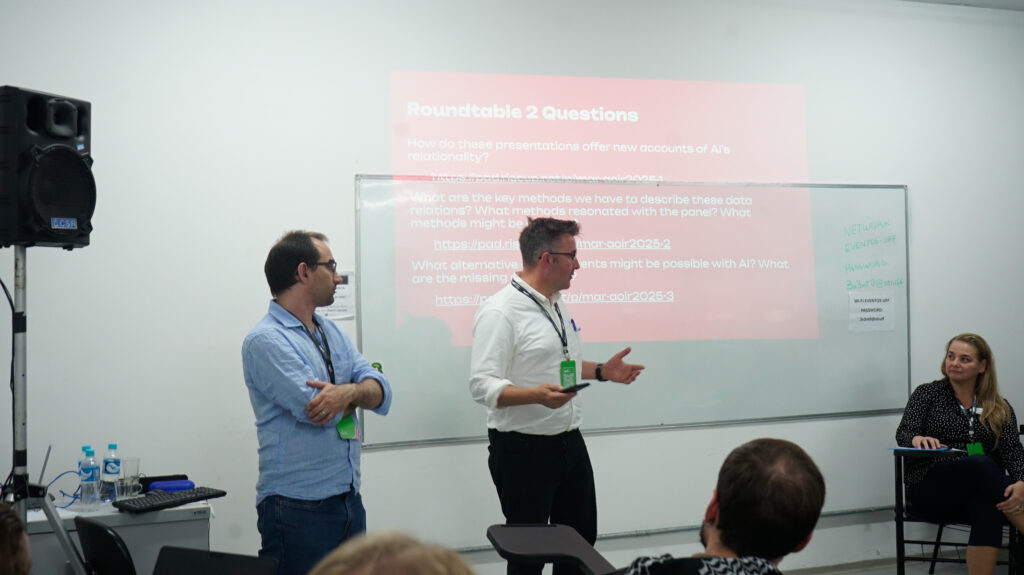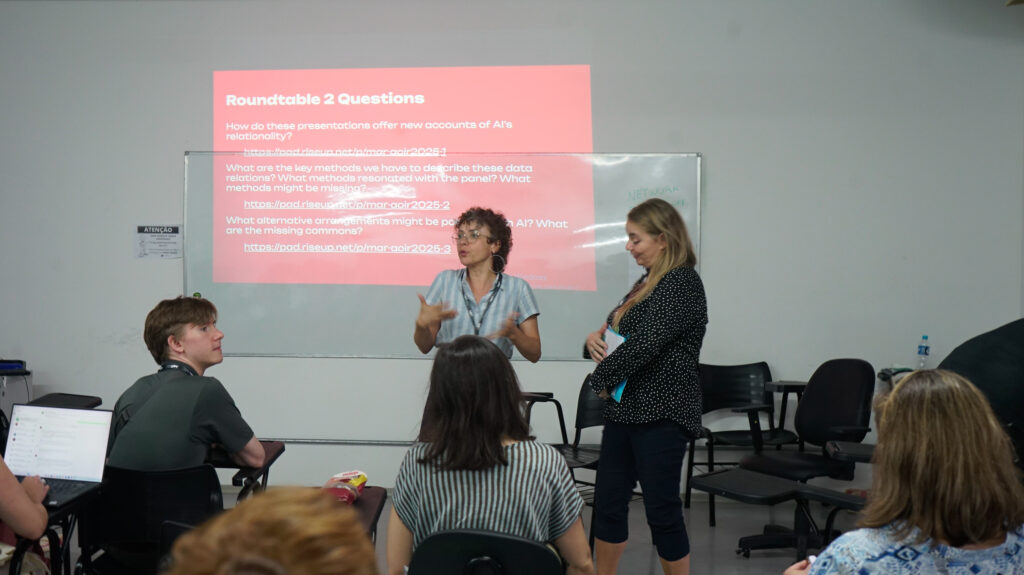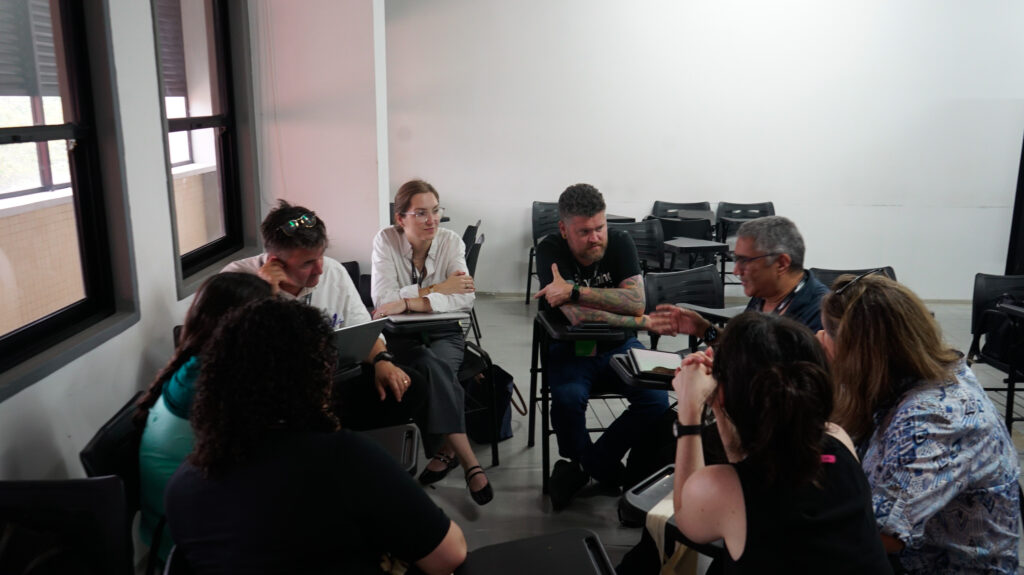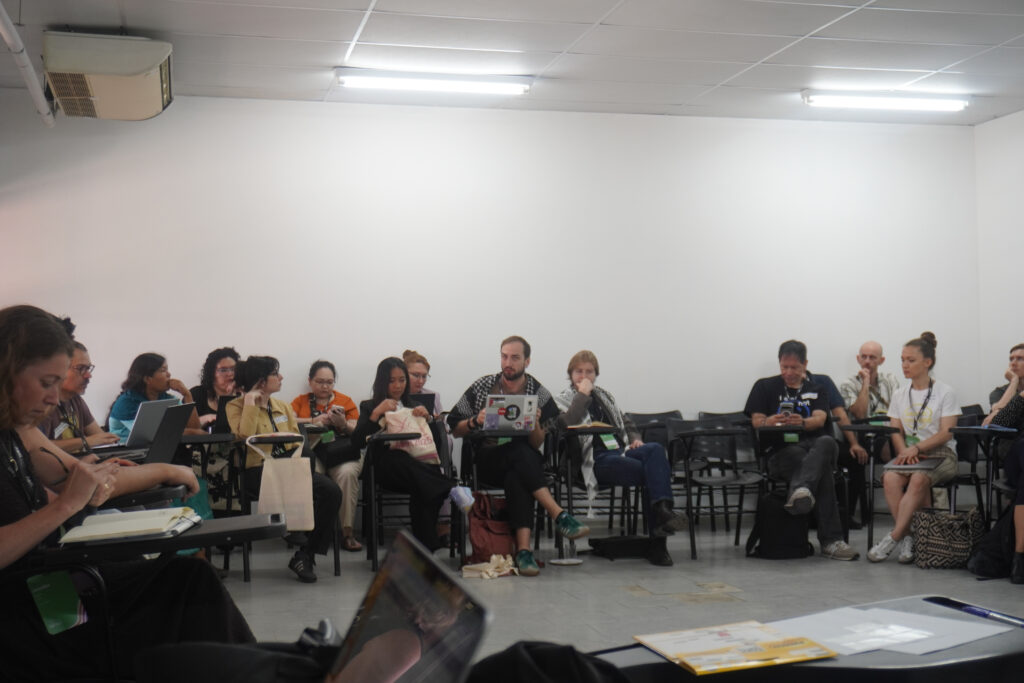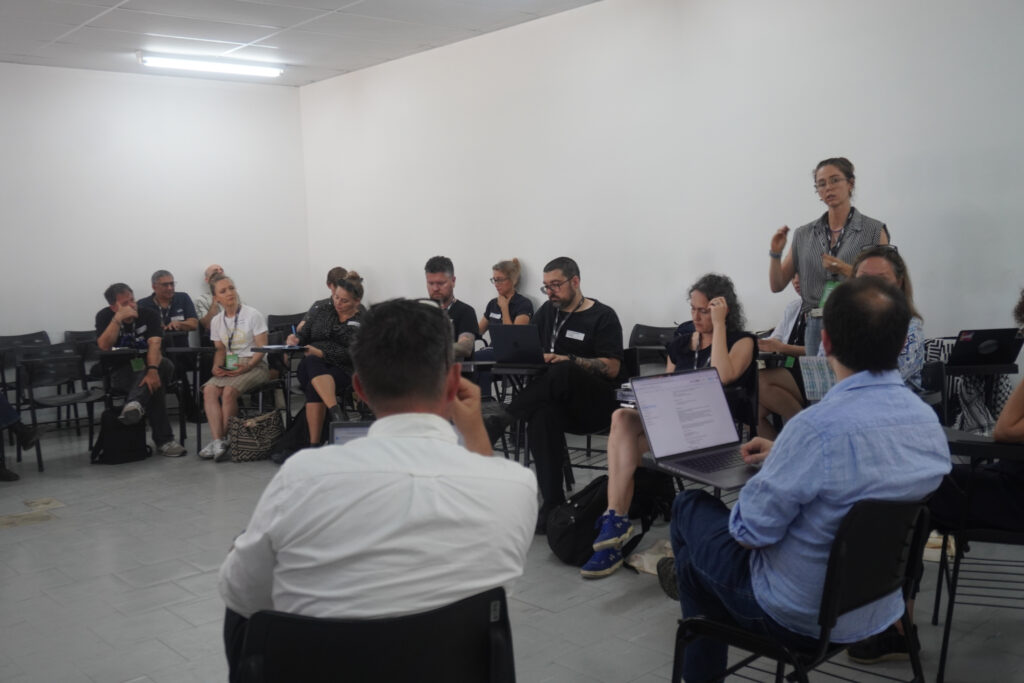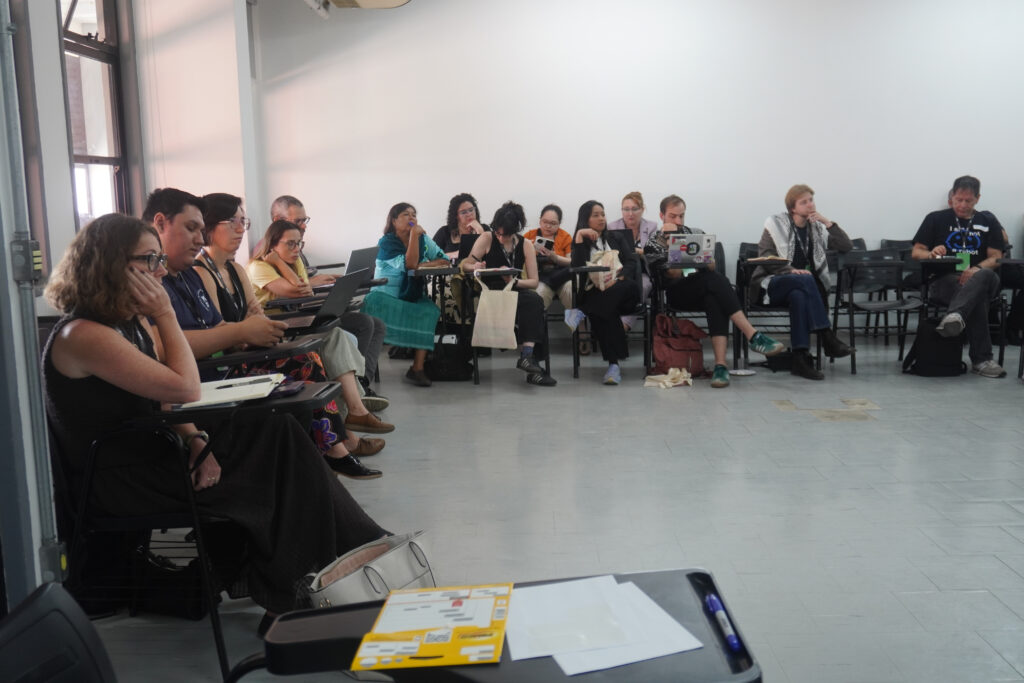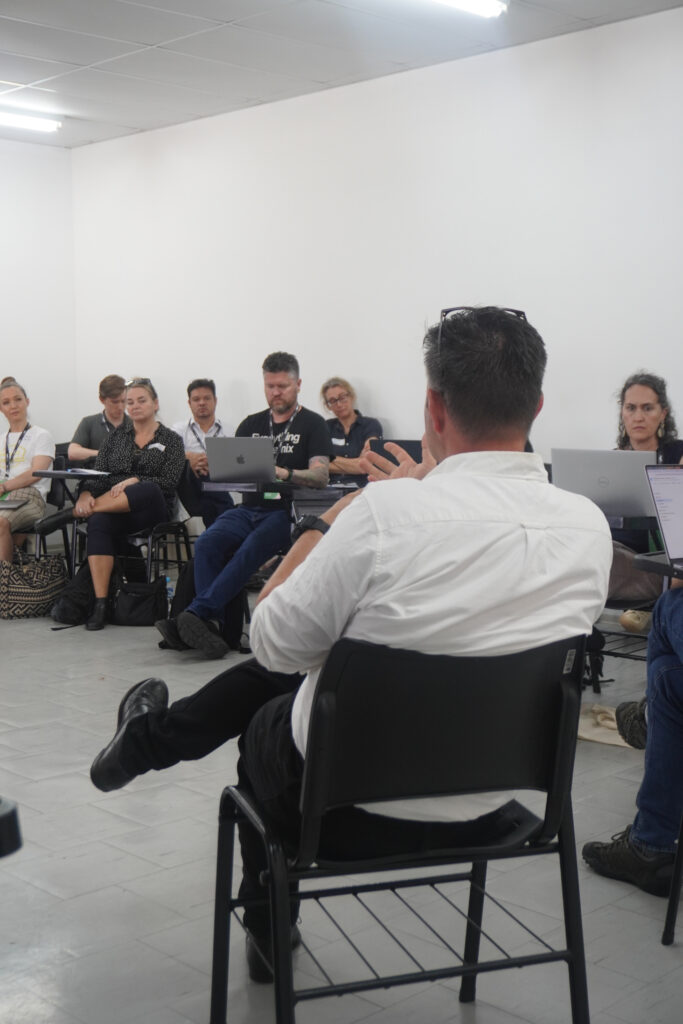
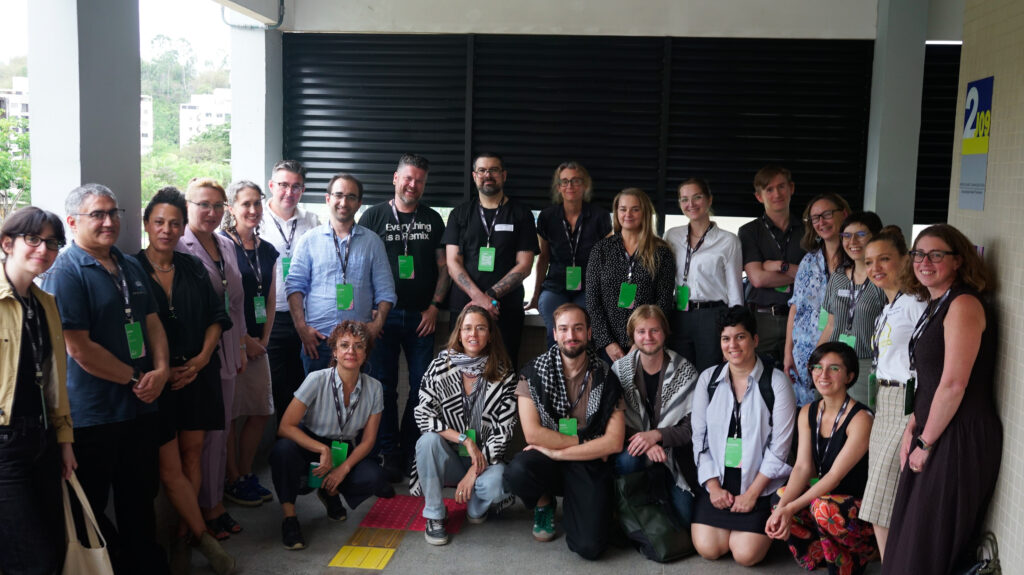
As part of the Association of Internet Researchers (AoIR) conference held in Niterói, Rio de Janeiro, Fenwick McKelvey, Jonathan Roberge, Mónica Humeres, Claudia López, Veridiana Domingos Cordeiro, and Luciano Frizzera organized a preconference on artificial intelligence infrastructure and public policy. Called The Model and the Reactor: Artificial Intelligence Infrastructure from Public, Private and Beyond. The purpose of the gathering was to explore ruptures against the growing cyberphysical project of “Big AI” or “AI as a platform.
For the call for papers and schedule, see here.The preconference sought to cultivate an international research community dedicated to understanding AI’s infrastructural impact and its alternatives through three main objectives:
- share findings and digital methods that expose AI’s global technological footprint and speculate upon alternative infrastructural models;
- facilitate comparative policy research measures in service of publicly beneficial AI infrastructure and alternative infrastructures; and,
- develop a joint statement of recommendations on these topics.
The day began with critical skill-sharing and discussion on the pre-conference’s two themes.
The first session focused on Infrastructure. Presentations ran the gamut of infrastructural concerns and were global in scope, though what often became clear was that large AI firms used a common strategy worldwide. Ana Carolina de Assis Nunes focused on the material harm that digital infrastructure can have on local environments, particularly the construction of data centers in Oregon and Pennsylvania. They invoked Microsoft’s plan to reopen a nuclear plant affiliated with the Three Mile Island disaster to provide power to their data centers.
Microsoft made another appearance in a presentation by Charis Papaevangelou and Eugenia Siapera, which focused on Greece and tech companies’ investments in data centers near Athens. The scholars in this case framed “big tech” as a colonial initiative to implement capitalist infrastructure abroad under the guise of data center construction.
Continuing the theme of data centers and colonialism, Chilean scholars Mónica Humeres and Claudia López traced a prehistory of data collection, unsullied by colonial intent, to speculate about a future in which data is not hoarded and controlled by big tech corporations. The Incan knot system, known as Quipu, not only served as an analog for data collection but also offered a more visible, tangible model in contrast to the often occluded immaterial quality of contemporary data. Transparency regarding data collection, its use, and who controls it is considered essential in this respect.
The second session focused on the theme of data relations, or the ways that AI creates new assemblages and entanglements.
Jennifer Pybus highlighted concerns about how personal and population data can be folded into what she calls the “memory of capital” for evaluation in service of its extractivist goals. Tangential to colonialist concerns regarding the construction of data centers globally is the trivialization of borders when technology companies primarily based in the United States can so seamlessly inveigle themselves into the infrastructure of other countries.
Joan Ramon Rodriguez Amat and Helena Atteneder considered what happens when digital borders begin to supersede the Westphalian borders of the nation-state. The prioritization of digital borders resituates power from the state into the hands of private corporations, where it is wielded through both software and hardware substrates as so-called “sovereignty as service.” The result is the transfer of parliamentary power to procurement services, displacing democratic legitimacy in favour of vendor governance. Sovereignty in this respect no longer acknowledges national boundaries but is instead co-opted as a deflection from the use of proprietary infrastructure by national concerns.
Sophie Toupin, in particular, identified how a company such as Canadian telecom TELUS can claim sovereignty while still running on chips produced by NVIDIA, a US-based company. This question, raised then, becomes: what happens when a global company is beholden to the corporation responsible for its infrastructure?
Corinne Cath-Speth uses the example of the Dutch company The Foundation for Domain Registration (SIDN) and what happened when they migrated their infrastructure to Amazon Web Services rather than from a previously local host. SIDN made the move because it wanted to be able to monetize its own knowledge store through a software-as-a-service package, but in the process, it eroded its institutional independence and control. Concerns over the heavy reliance on an American company especially rose after Trump won a second presidential election. Key to this appraisal, she argues, is making clear the distinction between what is and what is not the cloud, and how technology companies wield their platforms over it in service of their own economic goals. Essential to this point for Cath-Speth is ensuring the media and the public at large understand the implications of these infrastructural shifts and what control they can wield in defiance of these global conglomerates. Sovereignty, then, can mean defying the encroachment of these major corporations by securing platforms and initiatives in the service of knowledge sharing and dissemination.
Svetlana Bodrunova made the case that journalism is not only the promulgation of the written word but also the ingenuity of the individual writers doing the difficult legwork of collecting information on the ground to be rendered in the form of news stories–skills not only outside the reach of automated systems but also not within the thrall of private corporations. More than just journalism, however, what is essential is maintaining a commons built by individuals not beholden to power.
Zachary McDowell, in his defence of the commons vis-à-vis Wikipedia and its culture, argued for a form of knowledge not vulgarized by a technology in thrall to the profit motive of private corporations.
In general, the common themes of these events were how to develop a notion of knowledge sharing and technological infrastructure not beholden to corporate capture, primarily promoted by United States-based technology companies. Identifying how corporations collect, store, and use data both at home and abroad, and the implications this has on their own initiatives, and the impact they have on sovereignty, is essential to devising a means of resistance and the formulation of more ethical infrastructural goals.